
Welcome back to Natchez Trace
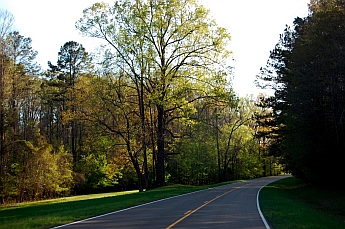
The Trace is perfect for a leisurely drive
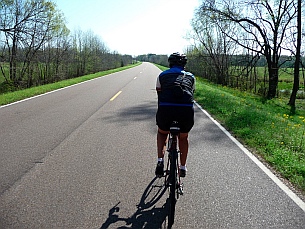
We took a spin on the bikes
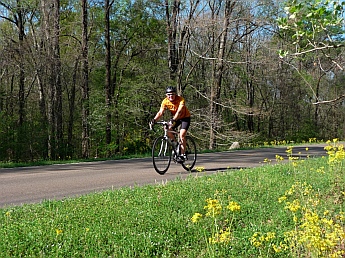
Wildflowers lined the road
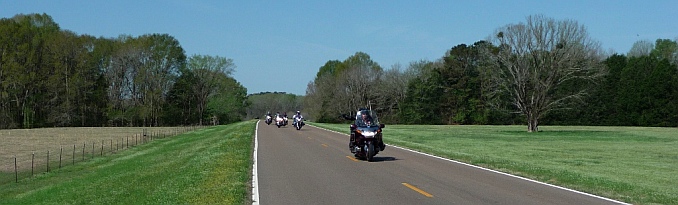
A motorcycle group enjoys a morning ride
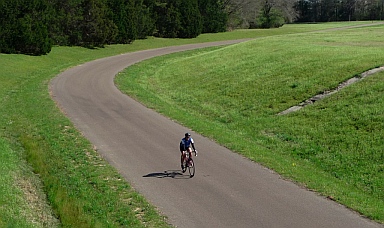
We take a side road to visit an Indian Mound
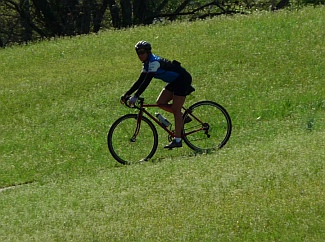
Riding down the side of the Indian Mound
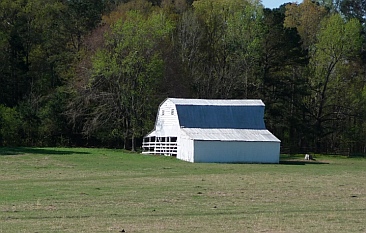
A barn in the distance
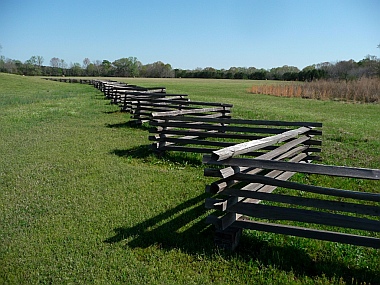
This split-rail fence had no joinery - the rails were simply
laid on top of each other
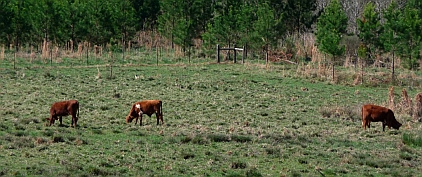
Cows in the distance
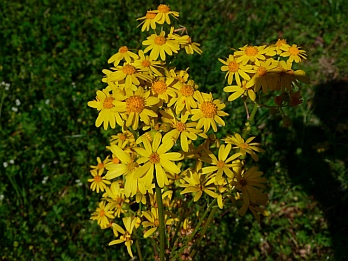
Bursts of color everywhere
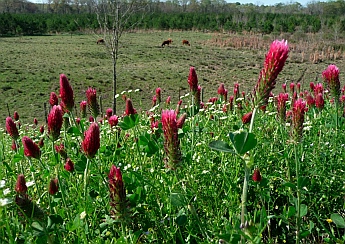
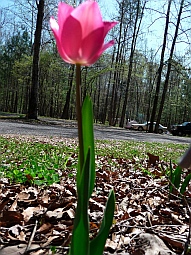
A lone tulip celebrates the
morning
Natchez Trace Parkway, Mississippi
March 20-21, 2009 - We reluctantly tore ourselves away from the sparkling waters
and soft sands of the Emerald Coast and made our way north.
We could have stayed on that beach forever, but we had two problems in the trailer
that needed attention. From day one our stove had acted up: if you cooked
something for a long time, eventually the burner knob wouldn't turn and you couldn't
adjust the flame. This meant that it was just about impossible to shift a pot from a
rolling boil to a gentle simmer.
Also, the sliding pocket
door that separated the
main room from the
bedroom had fallen off its
track. Neither of these
repairs was something
that Mark wanted to
tackle, especially
since the trailer was
still under warranty.
So we decided to
make a trip to the
NuWa factory in
Chanute, Kansas,
where the experts
were.
This change of plans
meant we would
retrace our steps
from last year,
traveling up through Alabama and Mississippi through Arkansas to the
southeast corner of Kansas. Poking around on the map we were happy
to see that this put the free campground at Rocky Springs on the
Natchez Trace right in our path.
The Natchez Trace is paradise for anyone that likes the simple pleasure
of going for a drive. It's a place to meander and ponder rather than a
route to get you somewhere. There aren't a lot of dazzling sights, but
there are endless miles of peaceful scenery with minimal traffic, clean
pavement and sweeping turns. It is ideal for bikes, motorcycles and cars that aren't in a hurry.
We rolled out our bikes and took a leisurely ride out and back along 15
miles of the Trace south of the campground. The air was fresh and clear,
flowers sprinkled the edges of the road with vibrant colors, and we
murmured to each other for the umpteen-millionth time, "What a great life!"
The Trace is layered in history, from prehistoric peoples to more
recent Indian cultures to the early settlers to modern America. The
ancestors of the Natchez Indian tribe lived along the route, and
evidence of their unusual customs has been found in their ancient
burial mounds. One Indian mound in particular had caught my
attention last year, and we took the little side route off the
Trace to see it once again.
There is not much to see but a small grassy hill topped with
informational plaques. However, their tales took my breath
away. Apparently the ancients had a radically different view
of the sanctity of human life than we do today. When a noble
man died, his slaves were strangled and buried with him. Far
more shocking, when a parent died, sometimes the surviving
parent killed their children as a sign of respect and grief.
It is easy from our viewpoint at this time in history to dismiss those
customs as barbaric, cruel, and unfair. However, in their society it
was somehow right and good and proper. Where our society would
have screamed "Murder!," theirs might have been nodding solemnly,
saying, "Yes, that was the right thing to do."
This was all very heady stuff, stamped out in a few brief
sentences on rusting metal National Park Service plaques placed
around the mound. The violent acts of the early peoples were
hard to fathom in such a bucolic setting. In the distance, the
cows were munching the grass, a barn stood quietly against the
treeline, and a split rail fence snaked its way across the meadow.
All around us the spring flowers were
bursting with color. Yellows, pinks
and pale blues filled the fields.
If you looked really closely, some of
the tiniest little blooms were the most
elaborate, but as a group they
formed a carpet of color.
Back at the campground, right outside the bathrooms, a
single tulip was opening up and greeting the day. How could
that bulb have possibly gotten there? There wasn't another tulip for miles around. It seemed yet
another mystery in this very mysterious place.
We said goodbye to the people we'd met at the campground, a young woman riding her bike
down the Trace for Spring Break and an older grey bearded guy on a motorcycle going the other
way. A little more north off the Trace for us, and we would soon find ourselves in the Ozarks.