
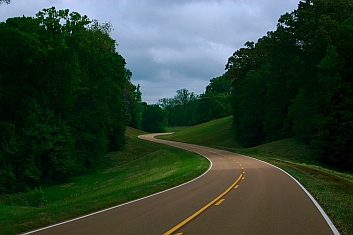
Natchez Trace Parkway
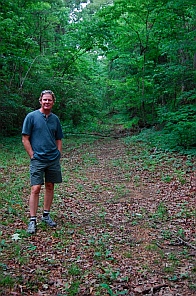
The Old Trace
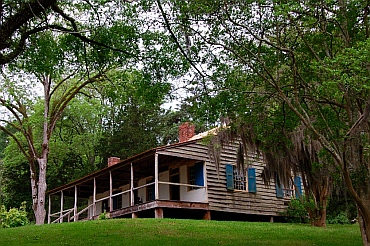
Mount Locust "stand"

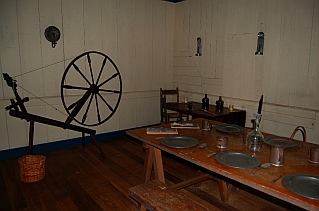
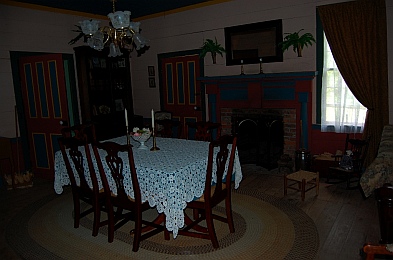
Dining room - with seating for 6
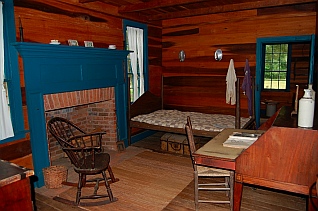
Parents' bedroom

10 kids slept here (5 in each bed?!)
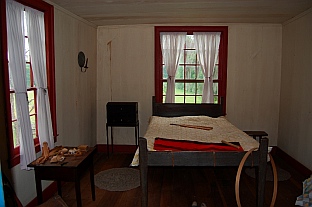
Grandmother and eldest daughter slept here.
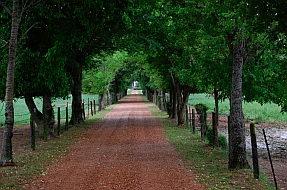
Driveway to Stanfield
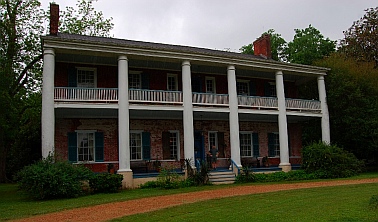
Stanfield, where Andrew Jackson was married.
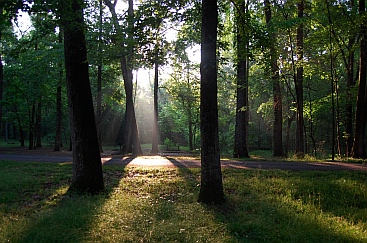
Rocky Springs Campground
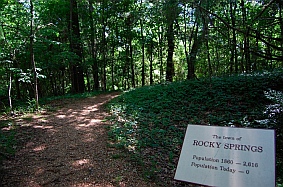
Rocky Springs:
Population 1860 - 2,616
Population Today - 0
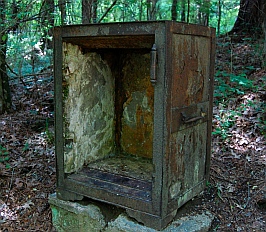
Bank vault
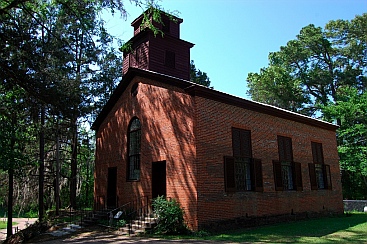
Rocky Springs Church, built 1837
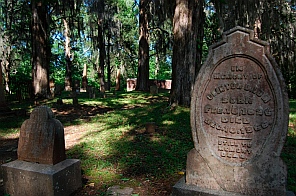
Rocky Springs Graveyard

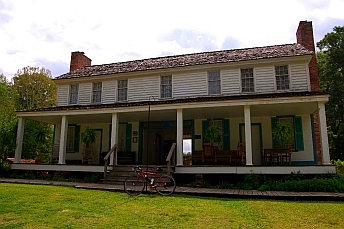
French Camp


Natchez Trace & Jim Henson Museum, Mississippi
April 29-May 2, 2008 - We left Natchez and ventured onto the Natchez
Trace Parkway, a 444 mile road that follows a primitive trail linking
Natchez, Mississippi with Nashville, Tennesse. The Parkway is a
remarkable two lane road that is closed to commercial traffic and has a
speed limit of 50 mph. The National Park Service oversees the Parkway
and maintains three free campgrounds along its length. Because of the
low speed limit the traffic is non-
existent and we often drove for many
miles without seeing another vehicle.
There is a lot of history along the
Trace and at times it felt like we were
viewing layers of history. We saw
Indian burial mounds from 4,000
years ago and travelers' "stands" or
inns from 150 years ago.
The original Trace was created by buffalo and other animals migrating north-south. The ancient
peoples used the trail for their own migrations. In the 1700's European traders would bring furs
and other goods down the Mississippi by boat, sell their goods in Natchez (and even sell their
boat for lumber) and then walk back to Nashville and other points north to do it again.
The Trace became a popular
place for highway robbers, as the
folks walking north from Natchez
had money in their pockets and
little protection. In the early 1800's, seeking to bind the vast and
turbulent frontier to its northeast seat of power, President Jefferson
ordered the army to widen the trail and make it a road passable by
wagon.
As was noted by the Secretary of State at the time, "the passage of
mail from Natchez is as tedious as from Europe when westerly winds
prevail." The Trace vastly improved communications, but by 1830 it
fell into disuse as steamboats going up and down the Mississippi
river offered easier transportation. The Natchez Trace Parkway
weaves along the original Trace route. At times the original Trace is
visible. It is a mere hiking trail. After the Trace was built into a road,
"stands" or inns popped up along the route. These offered food and
lodging to travelers -- on a very simple scale.
We visited the Mount
Locust stand. A family
operated this stand with
51 slaves. In the main
house the parents slept
in one bedroom. The
grandmother and eldest
daughter in another.
The other ten kids slept
in the remaining
bedroom. The
mattresses were made
of corn husks and rope.
Visitors made do on the
porch.
Looking at these
cramped
accommodations it was
hard to imagine that
arriving at one of these
stands was all that
inviting. However, after
walking or riding a horse
all day on a dirt trail
these intrepid travelers must have been accustomed to truly roughing it.
Nothing like us, with our motorized transport, smooth paved roads to drive on
and a buggy with a well stocked fridge, freezer, hot shower and 12 inch mattress.
We stopped briefly at Stanfield, the mansion where Andrew Jackson was married.
Like others we had visited, there was a long tree-lined drive up to the house, and
the house was a
pillared beauty.
At Rocky Springs Campground, one of three lovely and free
campgrounds on the Trace, we were treated to a gorgeous morning
with filtered sunlight pouring through the trees.
On the edge of this
campground is the
ghost town of Rocky
Springs. All that
remains of this once
bustling town is the church, the graveyard and two bank vaults. The abandoned
bank vaults reminded me of the vault we had seen in the Gulf Coast town of Bay
St. Louis, MS. However, the once prosperous rural town of Rocky Springs wasn't
devastated by a hurricane. Instead its death came from many sources: bad land
management that cleared hillsides for cotton leaving
erosion scars that can be seen today, the Civil War, a
yellow fever epidemic in 1878 and a boll weevil infestation.
It was eerie to walk a small trail through the woods where
there had once been cotton plantations and 2,616 residents.
There is nothing but trees now.
Up on the hill the church is still used, but
the cemetery's stones all date from the
1800's. How can a town vanish in just a
little over 100 years?
Port Gibson is one of the larger towns at
the southern end of the Trace. At one
time it was considered "too beautiful to
burn," but we didn't find it particularly
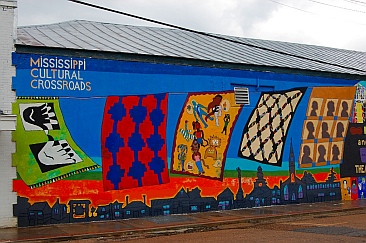
inspiring. There was an interesting mural
on the wall of one building, and a small street with a handful of
stores, some in business and some shuttered. More intriguing were
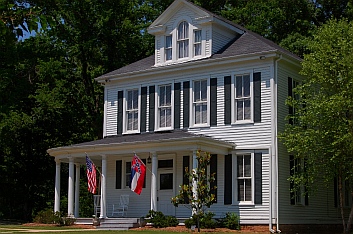
the homes on the outskirts of town where the Confederate flag was
flying. Some flew the flag along with the American flag, and some
flew it alone.
We took advantage of this ideal area for cycling to do a few rides along
the Trace. With no noticeable traffic, modest rollers, and interesting
historical sites every few miles, we thoroughly enjoyed our rides. One
day, while camped further north on the Trace at Jeff Busby
Campground, we rode our bikes down to French Camp. This was a
bustling community in earlier days and had several pretty buildings.
Besides the recent historical sites that can be seen on Natchez
Trace, there are a lot of prehistorical sites as well. We stopped
at several Indian ceremonial and burial mounds. Archaeologists
have dug through these mounds and made some startling
discoveries. At one site, when the leader of the tribe died it
seemed that all his attendants were killed and buried with him.
Often they were killed by strangulation. Likewise, when a parent
died sometimes the rest of the family would be strangled and
buried with the parent. As I pondered all this back at the
campground -- in the pretty setting sun -- it occurred to me that even though lots of people have concerns about individual rights in
our culture today, at least we don't do that.
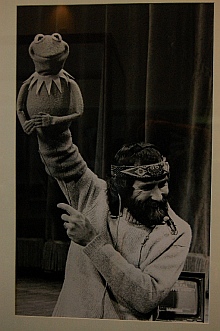
After we left the Natchez Trace Parkway we headed west and
north towards Arkansas. I was dozing when suddenly Mark
said, "Look, Kermit the Frog...!" I woke up just in time to see a
billboard for the Jim Henson museum. We spent a very happy
hour at this little outpost in Leland, Mississippi that is a
charming museum of Jim Henson memorabilia. It is run as a
labor of love by a woman who raised her children watching
Sesame Street.
I remember when that television show first aired in 1969. As a
nine-year-old its alphabet and numbers lessons were a little
juvenile, but I remember loving the gentle humor and I
watched it for many hours with my younger sister.
Mark knew the show from raising his kids watching it. He had been a
teenager when it first aired, so he never saw the episodes I did. It was
amusing standing around with the proprietor and realizing that all three
of us had watched it during different eras and we remembered different
things -- even different muppet characters.
This little stop in Leland rounded out a delightful visit to Mississippi.
From there it was on to the Ozarks in Arkansas.