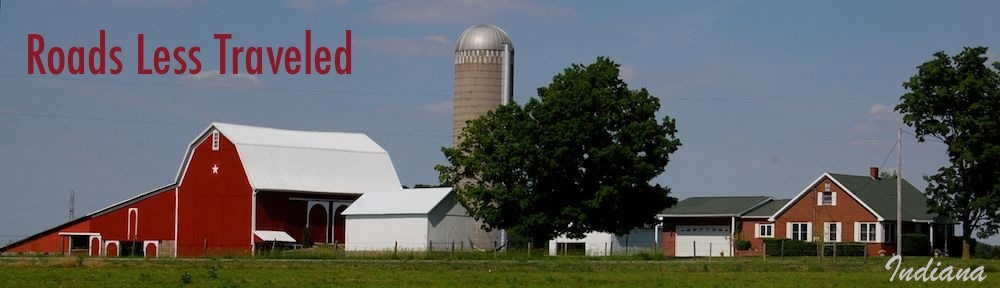
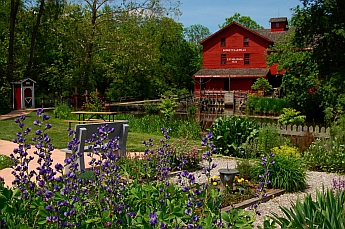
Bonneyville Mills
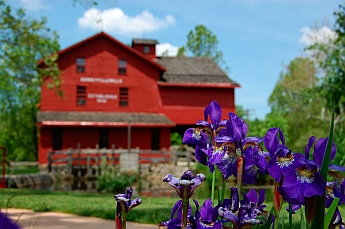
Irises in bloom
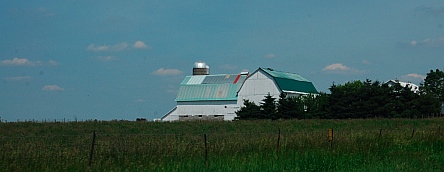
White Amish barn
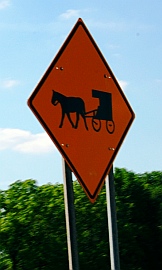
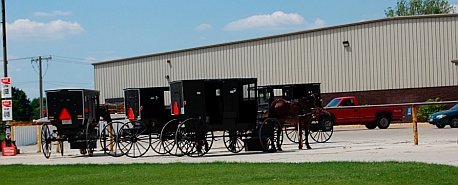
Horses & buggies parked at the hardware store
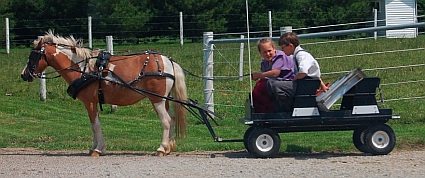
Kids get early driver's ed at a young age.
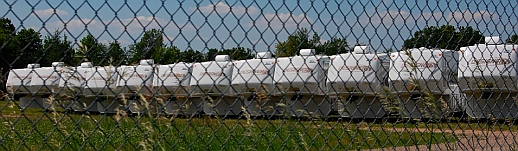
Jayco Designer fifth wheels in the holding pen
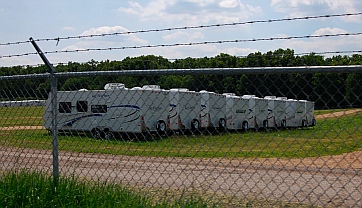
Jayco Jay Feather travel trailers
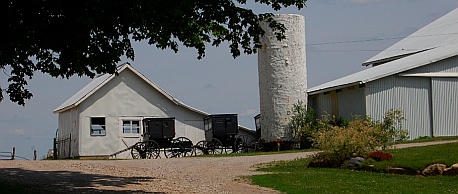
Amish home across the street from the Jayco holding pen
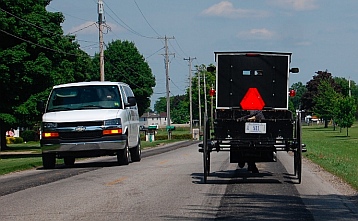
Modern versus antiquated.
Complex & Global versus Simple & Local.
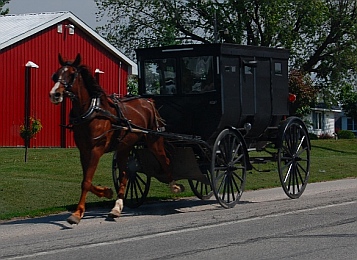
These buggies move at a fast clip
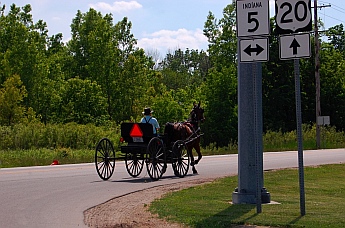
The Amish drive on government maintained roads
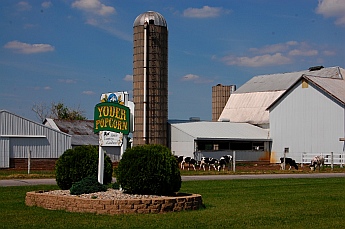
Yoder Popcorn
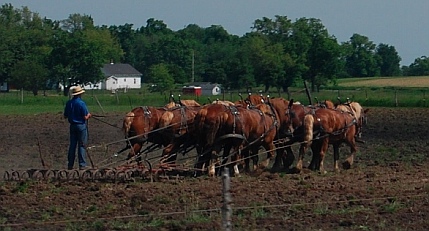
Plowing with a team of horses
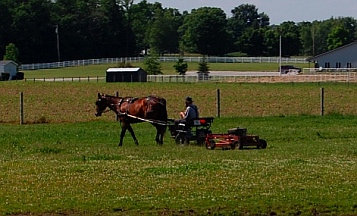
Getting a little motorized help

Tending the garden
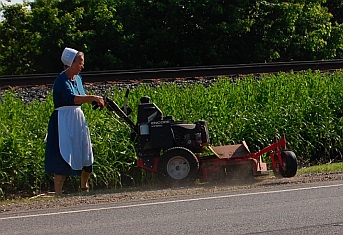
Nothing beats a little power
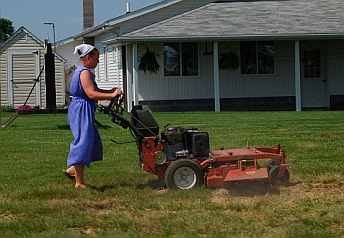
We saw at least seven women mowing this way
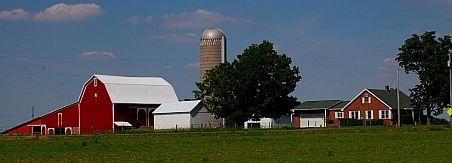
Return to Indiana countryside with red barns
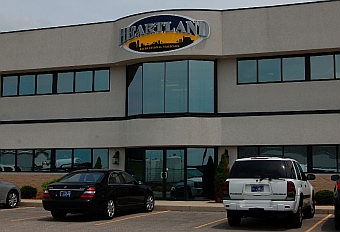
Heartland Factory
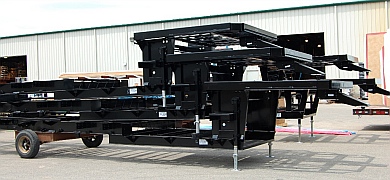
Trailer chassis stacked up outside.
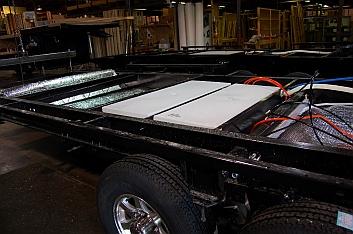
Wheels, water and holding tanks installed.
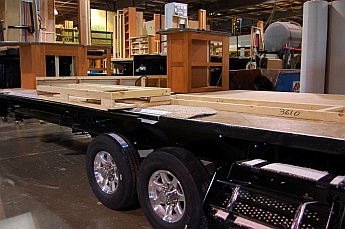
Flooring installed.
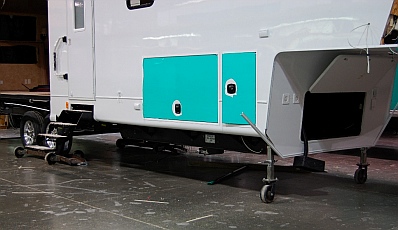
A unique dolly system moves trailers sideways down the line
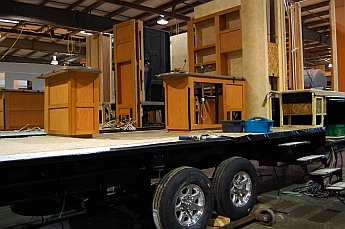
Furniture installation begins.
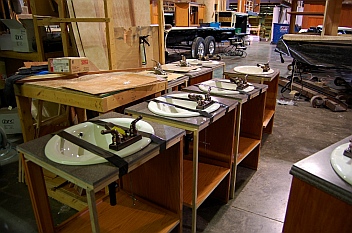
Bathroom sinks waiting for installation.
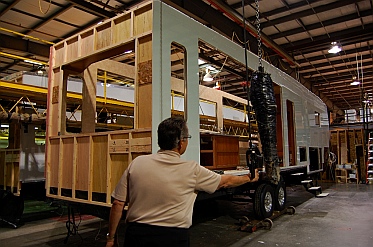
Side and rear walls installed. It starts to look like a trailer.
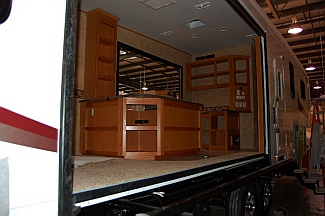
Ready to install the slide-out room.
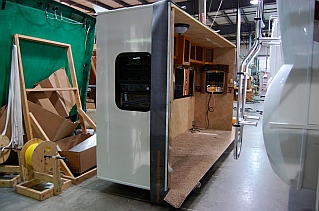
Slide-out ready to be installed on the trailer.
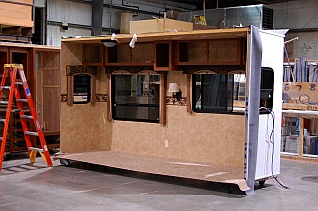
Slide-out is pre-assembled.
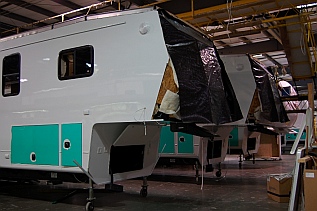
Ready for front caps to be installed
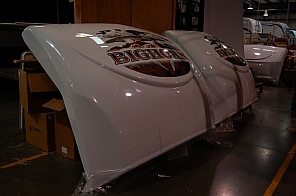
Front caps lined up for installation.
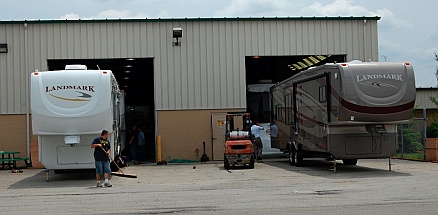
Ready for delivery.
Elkhart's Amish & Heartland RV Tours
Early June, 2009 - The Elkhart Visitors Center is a great resource. Not
only did they help us locate the RV/MH Hall of Fame, but they gave us a
list of RV factory tour schedules. It was astonishing to see how many
manufacturers are based in this town, and more surprising to see how
many weren't offering tours because they weren't in business any more.
I wanted to find out how to experience some of the local Amish culture,
and the lady at the desk handed me a CD called "The Amish Heritage
Tour." You pop the CD into your car's player and it guides you through
a 90 mile tour of the surrounding countryside. The accompanying paper
map helps you figure out where you are going. The CD assumes you
drive the speed limit, and gives directions on where to turn. As you drive
it narrates the history of the area, describing the industries that support
Elkhart today, pointing out the Amish settlements and giving insights into
their lifestyle, and explaining the Indian and European roots in the region too. The sound effects and accompanying music are
delightful, and the driving instructions are terrific. Every 5-10 miles there is something worth stopping to see, and the CD explains
where to park and what to look for as you walk around. We returned the
CD to the Visitors Center at the end of our tour and later found out you
can download the MP3 files from their website instead of borrowing the
CD.
We spent a very happy day with that CD. The first stop was Bonneyville
Mills. A beautiful iris garden out front caught my eye.
The second suggested
stop was the RV/MH Hall
of Fame, which we had
seen the day before. I
don't think you could
squeeze both tours into one day. What we were most eager to see was the Amish countryside. We
learned that some 20,000 Amish live in this area, of about 225,000 worldwide. They are a subset of
the Mennonites who number about 1.5 million in 65 countries worldwide. With a birth rate of 6.8
children per family, the Amish population is growing at 4% annually, making it one of the fastest
growing cultures in the world. Customs vary by community, but in this area their homesteads have
white barns rather than the usual red ones in the rest of Indiana and Michigan.
The essence of their beliefs is twofold: humility and isolation. Their forebears were so terribly
persecuted for their religion in Europe in the 1600's that they withdrew from society at large,
preferring to nurture their own community's independence while keeping the rest of the world at bay.
Therefore, when electricity became available in the 1920's, they rejected it, as it would bind them to
the non-Amish around them. Similarly, they prefer to travel by horse and buggy and work the fields
manually. A horse's range is perhaps 25 miles before it needs to rest and eat, shortening the distance they can travel outside the
Amish community. Manual field tools prevent anyone from attempting to acquire a larger field than his neighbor and thereby
aggrandize himself rather than remain humble. All this adds up to an extremely simple lifestyle that thrives without much
technology. However the rejection of technology is not so much of technology in and of itself but of things that could lead to one
individual standing apart from the rest or that could make the community dependent on the outside world.
I had seen photos of Amish horses and buggies but
couldn't really believe it, so when I saw them all tied to
hitching posts at the local hardware store and local
dentist's office I was quite startled. The biggest
grouping was at the local bulk food market, a huge
building that must have had 40 horses and buggies
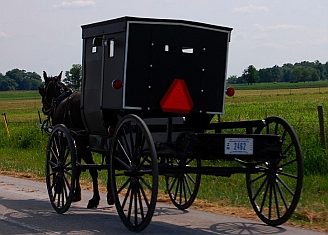
lined up outside. All the horses were dark colored and
the buggies were black. Most had a roof, windshield
and doors, though some were open air buggies.
The kids get early equestrian training and learn to
drive on the roads responsibly at a young age.
The CD instructed us not to take photos of the Amish, which
I mostly obeyed. However, in every Amish shop we entered
(which were staffed exclusively by Amish), there were
arrays of books and information about the Amish for sale,
featuring photos of all kinds, including some beautiful coffee
table books that had very intimate photographs of the
Amish in all aspects of their lives. Who took those lovely
photos, and did the Amish object? Apparently not, as they
were happy to display and sell the books. The Amish are
not totally independent of the world around them, as they
need to buy homes and land as their population increases,
so they interact financially. Some rely on the tourist trade
for money and others hold jobs. They have
been affected by the economic downturn as
well, and I read one local newspaper article
about an Amish man who had lost his job in
an RV factory and had to rely solely on his
farm. He liked spending more time at home
with his kids and wife, tending their farm
together, but he said if his job were available
again he would return to work without
hesitation.
In our search for trailers last year, we had encountered several
manufacturers who advertised that their trailers were Amish made,
especially the interior woodwork. The image of a man with beard,
suspenders and wide brimmed hat carefully crafting the cabinetry with
hand tools while his horse and buggy wait patiently outside can be
appealing. But it isn't quite accurate.
Jayco, in particular, advertises this Amish connection.
We came across their holding pen for trailers ready to
be shipped across country. It was an open field with
space for rows and rows of trailers. Only about half of
the rows were occupied, but it was interesting to see
rows of their high-end Designer fifth wheels and light-
weight Jay Feather travel trailers ready to go.
Directly across the narrow lane from this holding pen was an Amish farm, complete with a
large barn and several buggies parked out front. The woman of the house was tending her
vegetable garden and the clothes line was full of clothes swaying in the breeze. I was
fascinated by the juxtaposition of the simple living and home based values sandwiched into
the modern, mass market standards of the surrounding community.
We found this odd mix of
cultures on the road too, as the
horses and buggies fill all the
roads in the area. We stopped
at the Rise 'n Roll Bakery and
were enchanted with what lay
inside. A group of young Amish
were baking and selling their
goods. The girls were singing together as they worked, and when
they stopped periodically to talk together they spoke German (we later
found out it is a dialect of Swiss-German). Of course their English is
perfect as well, and the young boy at the cash register was utterly
charming as he offered us samples of the most amazing donuts I have
ever tasted. There was an innocence and sweetness among those
teenagers at that bakery that I have rarely experienced elsewhere.
And what better place for sweetness than a bakery; the sugar coated delights were heavenly. I
wanted so much to photograph the charming scene there: the girls in their bonnets laughing and
singing; the boy in his suspenders gently teasing them. Instead, I took a picture of a little sign
they had hanging below the cash register: "As you travel on life's pathway, may this always be
your goal: Keep your eyes upon the doughnut and not upon the hole!"
We took a fresh raspberry pie and
some donuts out to a little bench in
front of the bakery and watched the
Amish world go by for a while. The
horses and buggies were more
common than the cars, and they moved
at quite a clip. I was amazed looking at
one of my photos later to see that all
four of the horse's hooves were off the ground. The Amish may not travel
long distances, but they have the same urgency to get where they are
going as we do.
I read later that in some Amish communities only the young use open-air
buggies, and they are used for courting. That didn't seem to be the case
with this open-air buggy, but it sure looked like a fun way to get
around. Of course they travel on all the state and US highways that we do, and those roads are maintained by the governments
that govern us as well as them.
The Amish pay all taxes except social security tax (because they never apply for social security, relying on families to take care of
their disabled and elderly instead) and Worker's Compensation (because they do not use insurance). Again, both Social Security
and insurance would bind them too tightly to the community at large. However, some hospitals have begun to offer special care for
the Amish when they are sick, and they have been participating in studies of genetic diseases and disorders, as most Amish today
are descended from just 200 original European ancestors, and genetic disorders have become an issue.
We found ourselves eating our way across Amish land as we stopped next at the "Deutsche Kase Haus," the Cheese Factory.
They had a seemingly infinite variety of cheeses, and all were available for sampling. Mark was immune, because he doesn't like
cheese, but I tried almost all of them, and they were delicious. I noticed that other tourists were stocking up on goodies, both here
and back at the bakery, and I discovered that many people come into
Amish country on a regular basis just to buy their amazing foods.
One fellow who was traveling through ("I come here twice a year every
year!") highly recommended that we stop at the Blue Gate Restaurant in
Shipshewana and have the "Amish Plate." He said it would be one of the
best meals we'd ever have.
We didn't make it there, but we did get to Yoder Popcorn where we
bought a bag of Tender Tiny Whites.
Across the street we watched a man working his fields with a team of six
horses. The notion of using manual labor to discourage individuals from
trying to outdo their neighbors by having a bigger farm was intriguing.
The very essence of western culture can be such a Darwinian survival-
of-the-fittest scramble to the top, where aggrandizement is revered and everyone
wants to stand out. It was hard to imagine a culture where the drive for
achievement was capped. We learned that the Amish don't go to school past
eighth grade, usually attending one-room school houses in their communities. In
order to comply with the government's minimum age for leaving school, they simply
repeat 8th grade until they are the acceptable age. Amish students score higher
than average on all standardized tests except vocabulary.
Down the road we saw a man working his field with a single horse pulling a cart
that he sat in, and which, in turn, towed a gas powered tractor. Because it wasn't a
riding tractor, his farm size was naturally limited by his horse's stamina.
We did not see any churches in their communities, as they prefer to worship in
each others' homes, every other Sunday.
It was a perfect spring day, and every home had a prominent vegetable garden out front.
Almost every vegetable garden was being tended by a woman in her long dress and white
bonnet. The division of labor between the fields and the homes was distinct.
Women also mow the grass in
the yard. I stopped counting
after then 7th woman I saw
pushing a lawn mower.
These weren't little manual
rotary mowers like my brother
used to push in our tiny city
yard in Massachusetts. These
were big gas mowers that
could really get the job done. One thing we noticed is that extreme
obesity is not a problem with the Amish. All that work around the home
and farm keeps them trim.
There are Mennonite communities in the area too, and they are much
more lenient in their interpretation of how to live humbly, simply and
without ties to the outside world. At the local supermarket I watched a
group of women in long dresses and
bonnets filling their baskets with many
of the same goods we rely on, and
when they got outside they hopped in
a car and drove off.
Near the end of the tour we emerged
back into the familiar Indiana
countryside with red barns. They were
beautiful too, but it was a sign we were
coming back to a society that is more
familiar.
HEARTLAND RV FACTORY TOUR
We enjoy factory tours, and we wanted to visit
Heartland RV, one of the very successful newcomers to
the fifth wheel market. Having left the rundown looking
but elite Tartan yacht factory a few days earlier, what a
contrast it was to pull up to this modern building topped
with a proud sign and a new Mercedes parked out
front. We walked inside, inquiring about a tour, and several people instantly scurried off and came back with a salesman for us.
He was clutching some papers and thrust them towards me as he said excitedly, "Sales are down 27%!" I raised an eyebrow.
"We're number three in the industry!" He handed me the papers, and sure enough, out of 30 or so manufacturers, where sales
were down 40-60% across the board, Heartland was third from the top for smallest decline in sales volume. What a sign of the
times that a 27% drop in sales would be news to brag about.
He led us on a brisk walk to the beginning of the line, explaining to us that Heartland's founders
had been in the RV industry since time immemorial, coming from Coachmen years ago and
starting several other RV enterprises before opening Heartland. The place was abuzz with
activity. Drills, saws, stacks of parts, people moving fast: it was like a movie set. A feeling of
purposeful, focused ambition filled the air. We came out into the sunlight where the line begins
with stacks of chassis made by Lippert.
Once inside, each chassis gets
its water and holding tanks and
wheels installed. Then the
flooring is laid.
Unlike the traditional trailer
manufacturing techniques we
have seen elsewhere,
Heartland has a unique
method for getting the
trailers down the line. Most
manufacturers line the trailers up
nose to tail and let them stand on
their own landing legs and wheels
as they do at a campground. They
roll down the line all in a row on their
own wheels. In contrast, Heartland
puts each chassis on a dolly system,
both the front landing legs and the
rear wheels. They stand cheek-to-
cheek and roll down the line
sideways. The trailers don't come
off the dollies until they leave the
building, fully assembled.
This allows Heartland to put
twice as many trailers on
each assembly line. In
addition, each station on the
line has a scaffolding system
mounted to the ceiling that
can be lowered around the
trailer once it is in place to
allow workers easy access to
the high areas.
After the flooring is installed
on the chassis, the furniture
can be put in place. The
furniture modules are largely pre-
assembled.
Then the walls are installed.
The gaskets for the slides are
installed next, and the windows
are put in place.
Then the slide-outs, which are
assembled and furnished
separately, are mounted in
place.
Last of all the front cap is
installed on the nose of the
trailer.
Finally, the trailers emerge into the
sunlight, ready for shipping to the
dealerships.
There is a lot of pride in this
bustling factory. But when I asked
about warranties and repairs, it
didn't sound like the Heartland
factory wants to see their trailers
once they leave the plant. Unlike
NuWa, which offers phenomenal
personalized service at the factory for both
in-warranty and out-of-warranty work,
resulting in a steady stream of loyal customers
visiting their plant in Chanute, Kansas,
Heartland's repair service is handled exclusively
by the dealers.
Elkhart is loaded with RV manufacturers, and most offer tours. However, we
were ready to change gears and go up Michigan's west coast to visit some of the
cute waterfront towns that line Lake Michigan's shores.